If you are planning to study in Australia, you have likely heard about the massive shifts in securing a Student Visa (Subclass 500). The reality is that the Australian international education landscape has shifted drastically.
Getting an Australian student visa is currently tougher than it has been in over two decades, marked by record-shattering rejection rates and a massive structural overhaul in how applications are scrutinized.
Here is a complete, data-backed breakdown of the current visa status, just how difficult it is, and exactly why the doors are closing for so many applicants.
1. The Current Reality: Just How Difficult Is It?
To put it bluntly, the Australia student visa difficulty level is currently unprecedentedly high.
The Department of Home Affairs recorded historic offshore visa refusal rates for university students. At its peak, the rejection rate climbed past 30% meaning one out of every three international students applying from outside the country was rejected.
While overall approval numbers hover around 83%, that recovery is mostly due to a sharp drop-off in applications being processed from regions flagged as “high risk”. If you are applying from South Asia, the numbers remain incredibly tough:
- Nepal: Faced a staggering 50% to 63% rejection rate.
- Bangladesh: Faced a 51% rejection rate.
- India: Faced a 40% to 51% rejection rate.
In contrast, students from countries like China, Indonesia, and the Philippines see much lower refusal rates. This means your nationality and your chosen institution drastically dictate your chances of success.
2. Why Has It Become So Hard?
The Australian government is actively slowing down immigration. This crackdown isn’t accidental; it is a deliberate policy lever being pulled for three major reasons:
A. The Domestic Housing and Rent Crisis
Australia is battling severe housing shortages, skyrocketing rental prices, and general inflation. Net overseas migration peaked at record highs post-pandemic, creating massive political pressure on the government to curb numbers. International students, representing one of the largest intake streams, became the primary target for cooling down the population influx.
B. Weeding out “Ghost Colleges” and System Integrity
For years, a loophole existed where some applicants used student visas primarily as a backdoor route to work full-time in Australia, enrolling in low-cost, unaccredited vocational courses. The Department of Home Affairs is clamping down hard on systemic fraud including falsified financial statements, fake work experience, and non-genuine study intents.
C. The New “National Planning Level” Caps
The government has instituted strict caps on how many international student places education providers can offer. Because universities and colleges have hard caps, they are becoming far more selective about who they give a Confirmation of Enrolment (CoE) to, knowing a visa rejection damages their institutional risk rating.
3. The New Rules Game: What Changed?
If you are applying, you are facing a completely different set of requirements than students did a couple of years ago.
1. From GTE to GS (The Genuine Student Requirement)
The old “Genuine Temporary Entrant” (GTE) statement, where you had to prove you intended to leave Australia after studying, is gone. It has been replaced by the Genuine Student (GS) requirement.
The GS test focuses heavily on your actual educational intent. Visa officers will closely dissect your academic background, your financial situation in your home country, and exactly how your chosen Australian course directly maps to a high-value career path back home. Generic, AI-generated answers to these questions are one of the leading causes of immediate visa rejection.
2. Slashed Age Limits for Post-Study Work
Thinking of doing a degree later in life to secure an Australian Graduate Visa (Subclass 485)? The age limit for the temporary graduate visa has been slashed from 50 years old down to 35. If you turn 36 by the time you graduate, you are no longer eligible for the post-study work visa, completely altering the math for mature students.
3. Steeper Financial Proof
Due to the rising cost of living, the minimum proof of funds required has jumped significantly:
- Primary Applicant: You must prove you have access to at least AUD $29,710 per year just for living costs, entirely separate from your actual tuition fees.
- No “Show Money”: Large, sudden cash dumps into bank accounts without a transparent, legal paper trail (like an official education loan or long-term family savings) are being instantly flagged and rejected.
4. Tougher Language Barriers
The minimum English language proficiency requirements have been bumped up. For a standard Student Visa (Subclass 500), the required IELTS score is now 6.0 overall (up from 5.5).
5. Higher, Non-Refundable Visa Fees
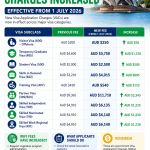
Applying is a massive financial gamble. The non-refundable student visa application fee sits at a steep AUD $2,000 for the primary applicant. If you get rejected, that money is gone.
6. Strict “Visa Hopping” Banes
You can no longer enter Australia on a tourist/visitor visa or a temporary graduate visa and “hop” onto a student visa while onshore. The government forces you to leave the country and apply from offshore, eliminating the common strategy of pivoting pathways while inside the border.
4. The “Traffic Light” Priority System
Under Ministerial Direction 115, visa processing operates on a priority ranking based on the risk level of the university or college you choose:
| Priority Zone | Who Fits Here | Processing Speed |
| Green Zone | Group of Eight / Top-tier Public Universities utilizing below 80% of their enrollment caps. | Fastest — heavily prioritized, subject to less intense document scrutiny. |
| Amber Zone | Mid-tier universities and private providers utilizing 80%–115% of allocations. | Standard — routine processing times with steady checks. |
| Red Zone | Lower-tier private colleges, vocational institutions, or those over their enrollment limits. | Slower / High Scrutiny — high probability of extreme delays or rejections. |
The Takeaway for Future Students
Australia is still open to international students, but it is no longer open to all international students. To guarantee your application meets official guidelines, make sure to review the complete, up-to-date documentation checklist directly on the Australian Department of Home Affairs Student Visa Portal.
If you want your visa approved, your application must be airtight. You need to target high-ranking, reputable institutions, ensure your financial documentation is flawless and completely transparent, and craft a highly personalized Genuine Student statement that treats your education as a serious academic pursuit